
Wow! I wasn’t expecting to be this impressed. Seriously? Yes—Rabby surprised me. At first glance it’s another extension wallet. But then a few features clicked in a way that made me rethink how I interact with dApps every day. My instinct said “this could save time,” and after a week of using it, I can say the convenience is real, though it’s not perfect.
Okay, so check this out—if you use browser-based wallets for DeFi, you know the usual headaches: accidental approvals, unclear gas fees, and those moments when a transaction does something you didn’t expect. Rabby tries to solve many of those. It’s an extension that focuses on transaction safety, clearer approvals, and tighter UX for multi-chain activity. I’m biased, but some parts just feel like they were built by people who live in the weeds of DeFi.
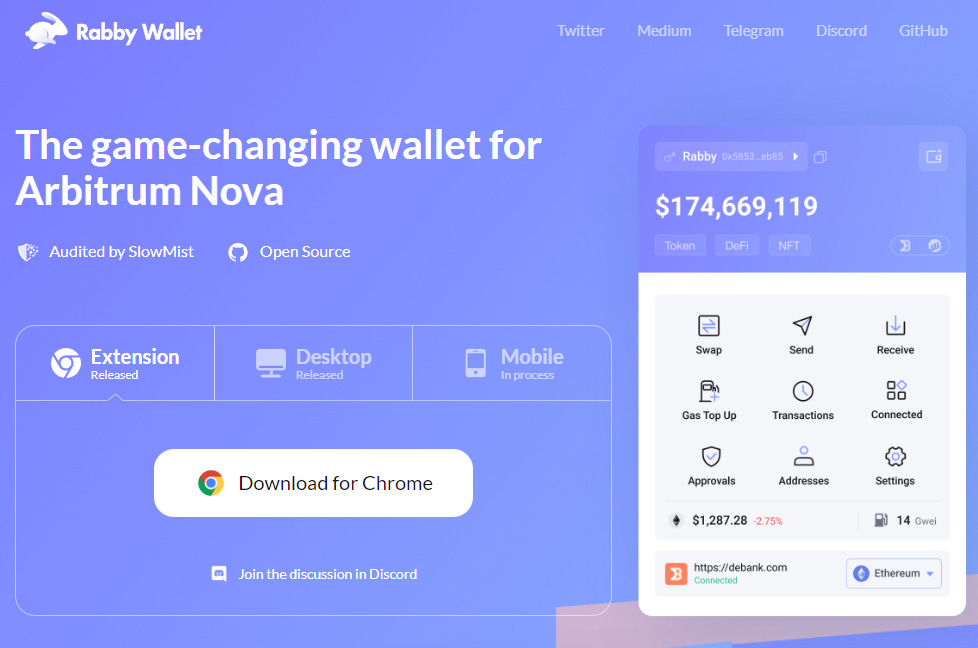
A quick walkthrough — what Rabby does differently
First: approvals management. Short story—Rabby shows token allowances and lets you revoke them without digging through explorers. That matters. Seriously. On one hand, approvals are a basic part of ERC-20 tokens. On the other hand, most wallets bury them. Rabby surfaces them right where you need them.
Second: transaction simulation. Hmm… this is a game changer for me. Rabby can simulate transactions to flag failures before you sign. It won’t catch everything, but it cuts down on failed sends and phantom gas losses. Initially I thought the simulations might be slow. Actually, wait—they’re surprisingly fast most of the time, though network congestion can still slow things down.
Third: hardware wallet support. If you use Ledger or similar devices, Rabby integrates cleanly. That extra layer of cold-key safety matters for higher-value accounts. My hands-on test went smooth. I didn’t have to toggle between multiple apps like I used to. Nice.
Fourth: multi-account and multi-chain flow. You can switch nets without fumbling. It supports Ethereum, BSC, Polygon, and many EVM-compatible chains out of the box. That broad support matters if you hop between mainnet trades and L2 experiments.
Installing Rabby (short guide)
Want to try it? You can get the extension directly via the official page for a straightforward rabby wallet download. Follow browser prompts, create or import a wallet, back up your seed phrase offline, and consider linking a hardware device if you plan to hold larger balances. Do this the old-fashioned way: write it down on paper. Not on a cloud note. Not on email. Paper. Seriously.
Pro tip: before importing funds, test with a small amount. Very very important. Send 0.01 ETH or equivalent. Confirm everything behaves as expected. It feels basic, but you’d be surprised how often folks skip this.
Security and privacy considerations
Rabby is built as a browser extension, so it inherits extension risks. That means treat it like a keyring. Keep your browser clean. Use strong OS protections. I’m not 100% sure about every internal telemetry detail (the team documents that well), but they do emphasize on-device processing for signing. That’s reassuring.
Also, this wallet places heavy emphasis on “approval hygiene”—showing which dApps can spend your tokens and offering revoke tools. That reduces attack surface. On the flip side, no tool is a silver bullet. If a dApp phishes you into approving a malicious contract, Rabby helps you catch it faster, though the ultimate responsibility is still yours.
Something felt off about one UX flow at first—the custom gas editing is powerful but a little buried. On one hand power users will love it. On the other, newcomers may miss it. So yeah, there’s a trade-off between clarity and depth.
DeFi flows that are less painful with Rabby
Swapping across aggregators. Rabby’s built-in swap UI (and integrations) help you compare offers. It’s not the only aggregator out there, but it reduces context switching. I tried a token swap on Polygon and it presented gas estimates cleanly. The confirmation screen highlights which contract you’re interacting with, which matters a ton.
Approvals and limits. You can set spend limits rather than full infinite approvals. Small detail. Big peace of mind. If you want to be conservative, set low allowances and increase them when needed. Rabby makes it less cumbersome.
Bundle transactions. For advanced users, batching and reviewing multiple steps before signing feels much tighter than the usual wallet flow. That said, this is advanced territory. If you’re brand new, take it slow.
UX quirks and things that bug me
Here’s what bugs me about some parts: the interface occasionally assumes you already know DeFi jargon. Not everyone will. There are helpful tooltips, but a few flows could use friendlier language. Also, extension management is browser-dependent, so don’t be surprised if settings are in slightly different places between Chrome and Brave.
Another thing—mobile experience. Rabby is primarily a desktop extension right now. If you’re a heavy mobile DeFi user, that can be limiting. (oh, and by the way…) they do offer connection options to mobile wallets, but it’s not the same as a native mobile app.
Who should use Rabby?
Use Rabby if you regularly interact with dApps and care about clearer transaction visibility. It’s great for power users who want more control but also for intermediate users who want better safety defaults. If you’re a complete newcomer, you can use Rabby, but expect a learning curve. That’s not a knock—it just rewards attention.
If you’re managing high-value assets, pair Rabby with a hardware wallet. No single tool can guarantee safety; layering defenses is the practical approach.
FAQ
Is Rabby Wallet safe to use?
Short answer: it is reasonably safe when used correctly. Rabby adds useful protections like transaction simulation and approval management, but it’s still a browser extension—treat it like any other browser-based wallet. Use hardware wallets for high-value storage and never share your seed phrase. My instinct: it’s safer than many alternatives, though no wallet is perfect.
Can I import an existing seed into Rabby?
Yes. You can import existing wallets using seed phrases or private keys. Do this carefully. Import into a clean environment and restore only on devices you control. If you already use a hardware wallet, prefer connecting that instead of importing the private key.
Which chains does Rabby support?
Rabby supports Ethereum and many EVM-compatible chains like BSC and Polygon, plus several layer-2s. The team expands support frequently. If a chain matters to you, check current docs before moving large funds.