
Whoa!
Browser wallets feel convenient.
They are fast and they sit right in your toolbar, ready to sign.
But that ease has a cost, and my gut has been nagging me about that trade-off for a while—seriously, it bugs me every time I approve a permission.
Some of this is instinctive, and some of it is learned the hard way.
Here’s the thing.
Most people treat extension wallets like apps on their phone, but browser contexts are different.
On one hand you get smooth UX for DEX trading and NFTs.
On the other hand your keys are a click away from web scripts that don’t always play nice, and that threat surface grows with every site you visit.
I’m biased toward user control, so that part bugs me a lot.
Hmm… initially I thought that simply using a hardware wallet would be the full answer, but then I realized the user experience trade-offs leave many exposed.
Actually, wait—let me rephrase that: hardware wallets reduce risk, though they don’t solve phishing or UX-level permission mistakes.
My instinct said users will still click through scary prompts if the UI looks familiar.
So education alone isn’t enough, because the attacks are getting craftier and the prompts more subtle.
On balance, this means your browser wallet needs layered defenses.
Short checklist first.
Keep your extension updated.
Limit site permissions.
Use separate browser profiles for high-value accounts.
Sounds simple, but people don’t do it very very often.
Seriously?
Yes.
Attackers automate phishing that mimics wallet dialogs.
They can hook into allowed origins, reuse popup styles, and trick users into approving transactions that are opaque.
That happens because transaction details can be confusing and many dapps ask for blanket allowances.
Think of permission grants like handing someone a credit card with an open tab.
On one hand you might need to approve a token spend to use a DEX.
Though actually, you can often set allowances to minimal amounts or use one-time approvals where supported.
Some wallets make that easy; others bury it under layers.
That difference matters a lot.
Okay, so what do you actually do?
Start with threat modeling for your own funds.
Decide what you can live with losing and what must be air-gapped.
If you hold big positions, move them off the everyday extension and into a hard wallet or cold storage.
For regular trading, isolate windows and use burner addresses.
Check this out—visual cues matter.
Some extensions, for example, will show a red border or explicit origin on signing dialogs, and that helps stop mistakes.
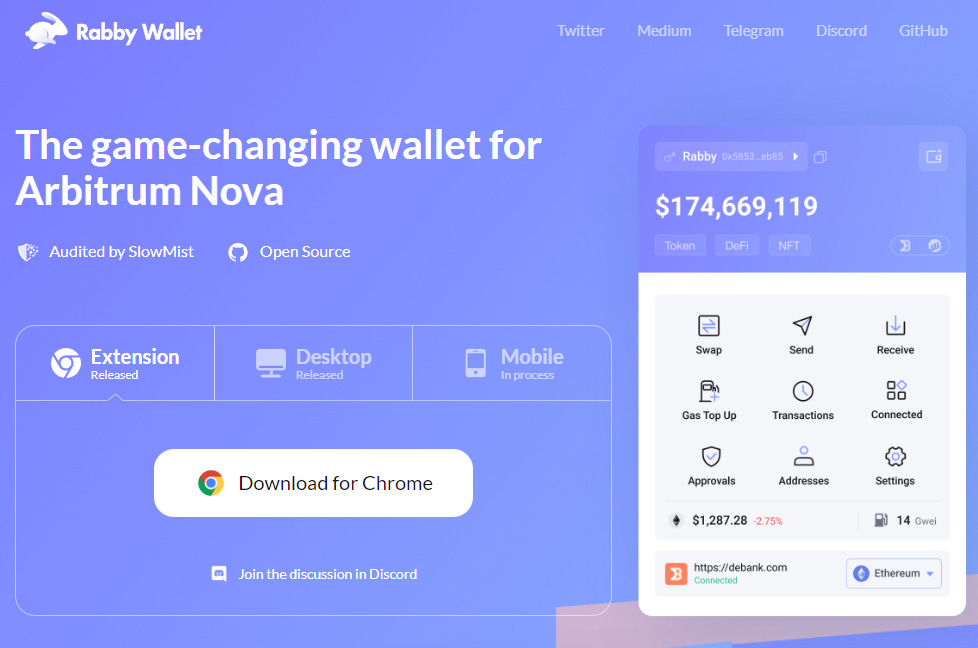
Rabby is one extension that emphasizes clearer prompts and better permission control for DeFi users, and if you want a practical place to try that approach you can see a Rabby wallet download here: rabby wallet download.
I tested that flow and noticed fewer accidental approvals, though I’m not 100% sure it’s bulletproof.
Small UI nudges make a real difference, even if they’re imperfect.
Phishing gets clever.
They spoof domains, hijack injected content, and sometimes place overlays that look native.
So use well-known extension stores, verify publisher signatures, and double-check extension IDs when possible.
Also, don’t install random helper extensions that promise quick gains or gasless trades.
Those almost always come with hidden costs.
Here’s a more technical angle.
Content scripts can read page DOM and present fake UX elements.
If you give an origin broad privileges, a malicious site or iframe could attempt to call wallet APIs under the hood.
Therefore, minimizing approvals and revoking old ones is critical.
Most wallets expose a permissions page—use it regularly.
My instinct said that manual revocation is tedious, and yeah, it is.
But there are ways to automate checks or use wallet features that limit allowances to single transactions.
On the other hand, I admit I still skip this housekeeping sometimes… the human factor is real.
So schedule it like a regular security chore.
Treat it the way you treat software updates for your phone.
Also: seed phrase hygiene.
Write it down on paper.
Don’t store it in cloud notes (no no).
Consider a steel backup for larger sums.
And if you use a password manager, don’t copy-paste seed phrases into it—seriously, that defeats the point.
There are behavioral tricks that help.
When a transaction pop-up appears, read the “to” address and the calldata summary.
If something looks off, pause—step away.
My rule is a 30-second delay for any transaction over a dollar value I care about; this time often surfaces doubts.
That pause has stopped me from signing a sloppy approval more than once.
On-chain monitoring complements personal discipline.
Set up alerts for large outgoing transactions or for approvals to new contracts.
Use public explorers to verify suspicious contract addresses quickly.
If you see an unexpected approval, revoke it and move funds.
Yes, that can be a scramble, but it beats finding an empty wallet later.
Developer ergonomics matter too.
Wallet teams should design confirmation dialogs that show human-readable intent—spell out token names, amounts, and linked contract addresses.
Some projects are good at this, some not.
When interfaces hide calldata or show hex strings without context that’s a red flag.
As a community, we should push for better UX standards for signing.
One more practical tool: sandbox browsers.
Run risky dapps in a disposable profile or container.
If something tries to escalate permissions, the blast radius is smaller.
This is a mild pain, but it’s a real defense-in-depth move.
Think of it like using a burner phone for sketchy calls.
Okay, a quick admission: I’m not perfect at all of this, and I still make small mistakes when I’m tired.
But the more you modularize your crypto life, the fewer single points of failure you have.
Bitcoin maximalism aside, multiple wallets and role separation are healthy habits.
I’d rather manage a bit more complexity than recover from a large exploit.
Call me cautious, but I’m deliberate about these choices.
Practical steps you can take today
Start with a permissions audit.
Revoke approvals you no longer use.
Use separate profiles for trading and browsing.
Consider wallets with granular approvals and clearer signing UX—the Rabby team focuses on that balance and you can try a rabby wallet download if you want a different workflow.
Finally, train yourself to pause and verify before every signature; that tiny habit saves scars.
FAQ
What if my extension gets compromised?
Move funds to a secure wallet immediately, revoke approvals, and rotate any connected keys.
If you suspect malicious code, uninstall the extension and reinstall only from the official store after verification.
And consider reporting the incident to the extension publisher and relevant communities so others are warned.
Are hardware wallets always better?
They reduce key exposure, yes.
However, they don’t stop phishing that tricks you into signing bad transactions—so combine hardware wallets with careful UX checks and best practices.
Defense in depth wins.
How often should I audit permissions?
Monthly is a good baseline for active users.
If you trade frequently or interact with many contracts, check weekly.
Make it a habit, like checking your bank account.